
Story
“It's incredible what you can achieve when you take the first step"
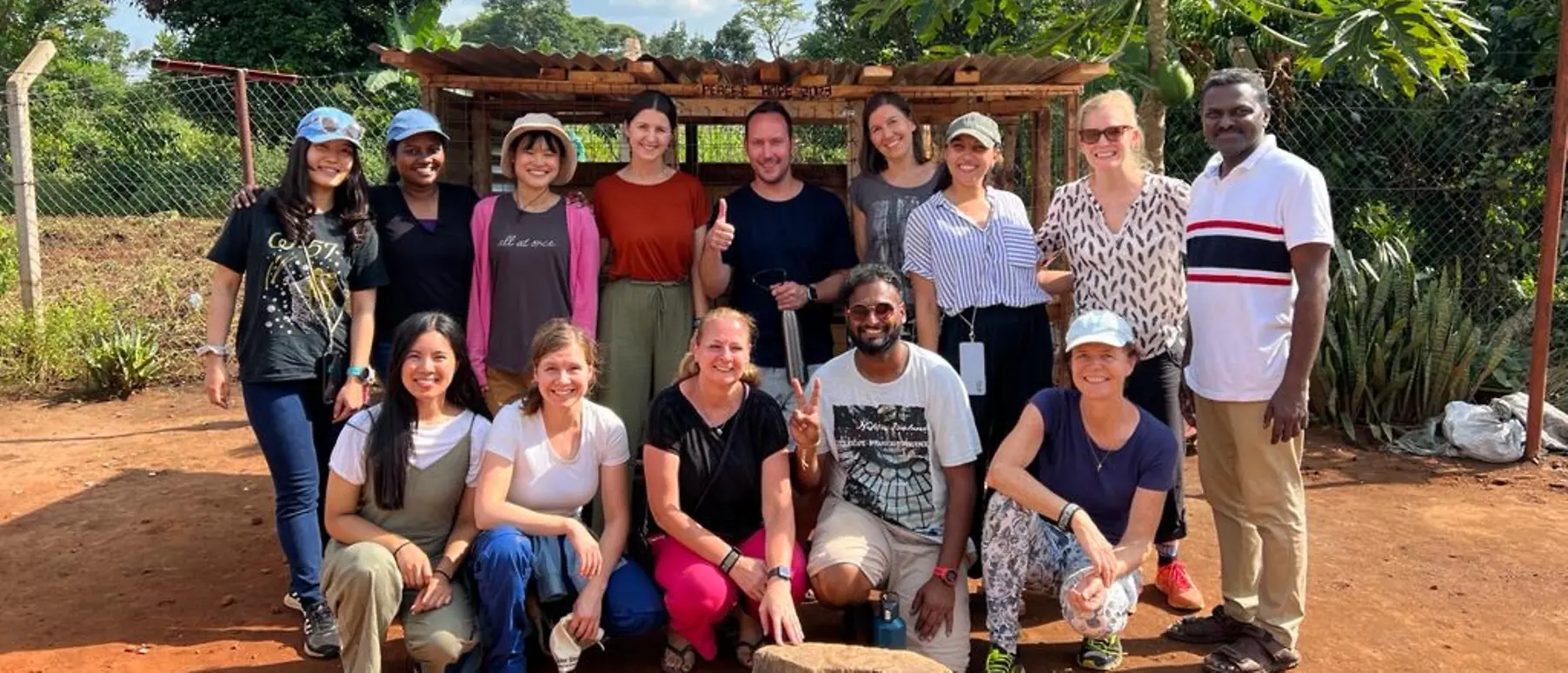
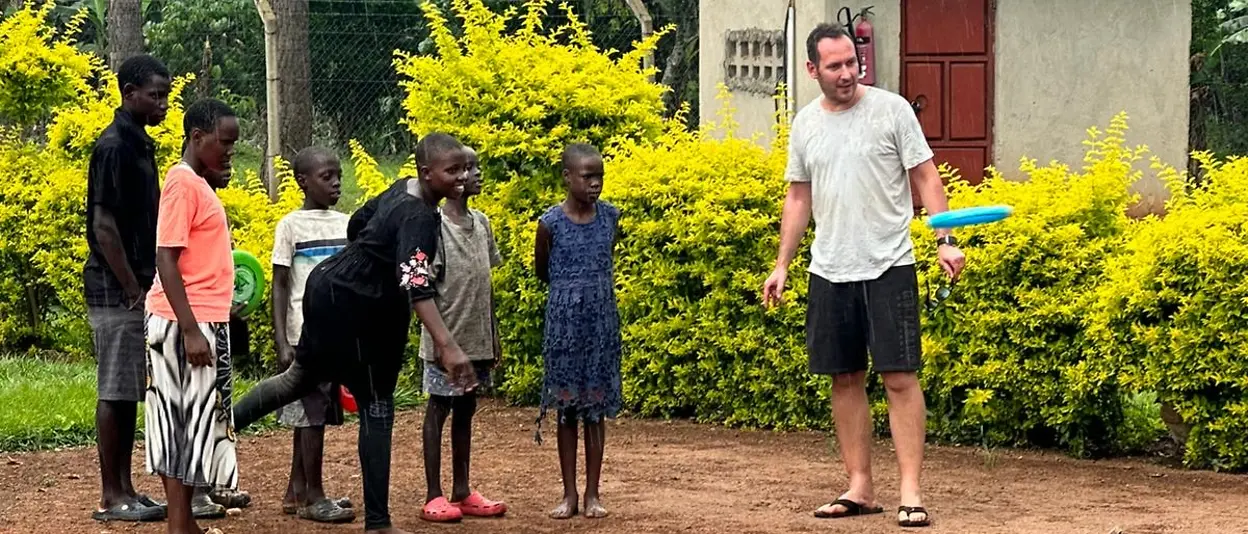
"Making a difference one life at a time” – this is the Sonrise Ministries' mission in Uganda. The initiative runs three orphanages and is involved in many activities for the welfare of the community in Uganda. In 2014, Henkel employee Gabi Haak traveled to Lake Victoria for the first time to volunteer in the orphanages. And it wouldn’t be the last time. Since her first trip, she has returned to Uganda again and again.
In 2017, she founded the association Peace's Hope in her hometown of Düsseldorf, which supports the Sonrise Ministries with donations, but above all with on-site help. For several years now, other volunteers have been accompanying her on her trips – among them, often colleagues from Henkel. Gabi Haak and two participants of the recent team trip, which took place between November and December 2023, share their experiences in Uganda.
Gabi Haak on her experiences in Uganda
Sina Pfanschilling on her experiences in Uganda
Monika Böhnke on her experiences in Uganda
Manager ICD Operating Excellence at Henkel
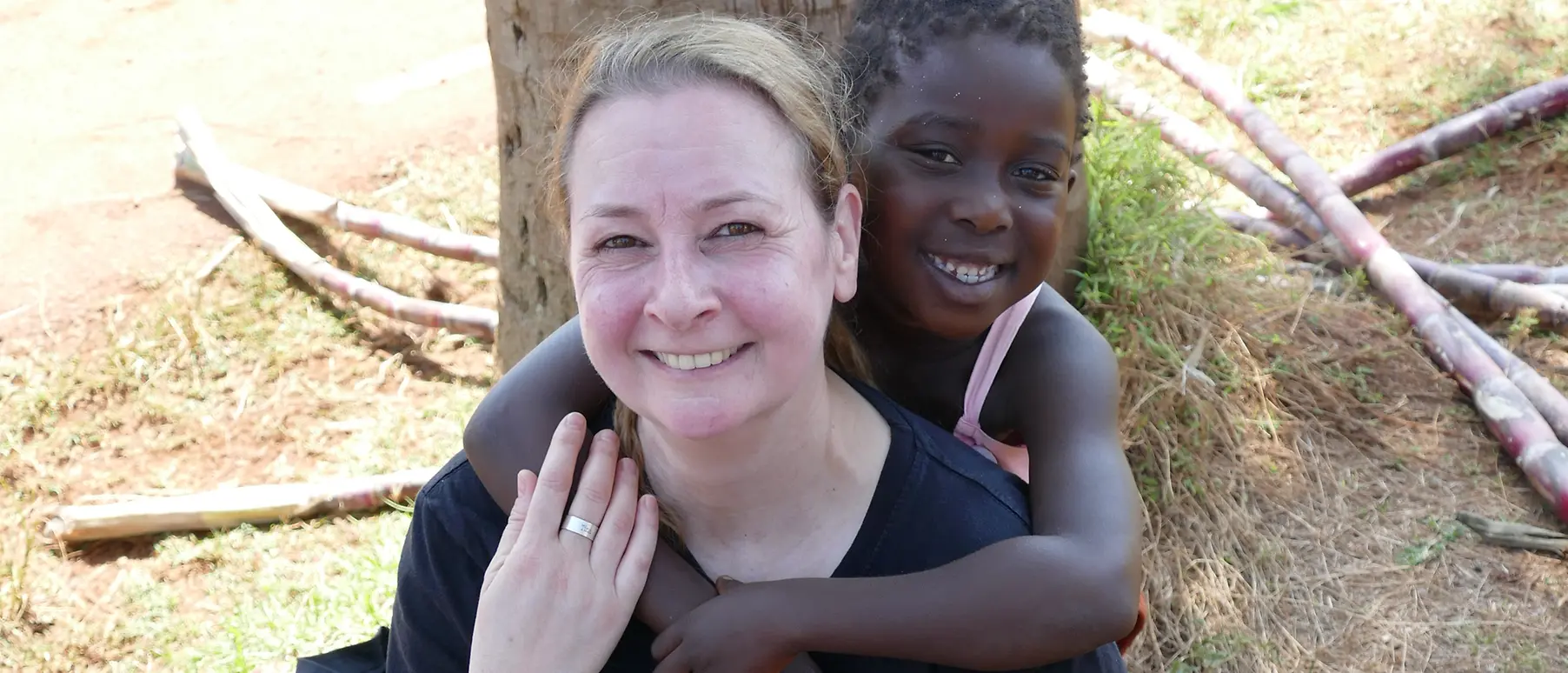
My first visit to the Sonrise Ministries felt like I had finally found my place in life. A feeling of being part of a family, also because the children immediately built a very close relationship with me. The organization impressed me because they don't just use the donations for themselves, but also for members of the community. This is unique in Uganda. The three founders grew up in an orphanage themselves. They come from a Baptist community and the value of sharing is deeply rooted in their religion. The children learn from an early age that they always have to give something back from the little they have.
Since my first visit in 2014, I have been to Uganda a total of 11 times, each time for a month. In 2015, a colleague asked me if he could join me. Through internal communication at Henkel, word about my social engagement got around and more and more colleagues wanted to come along. It was never planned, but we now have a large group of volunteers: Last year, we traveled with 17 people – and 12 of them were colleagues from Henkel.
Organizing the trips is a lot of work, even though we just work as an intermediary for the Sonrise Ministries. But through the trips we gain trust. Because people can see that 100 percent of the donations reach the local community. We pay all running costs from the association's membership fees. And whatever is left goes towards the projects.
Peace's Hope is not a project initiated by Henkel, but our commitment is now supported by the company in many ways. Up to five days of special leave are granted for the trips. And the “Fritz Henkel Stiftung” foundation has contributed financially to the construction of schools, homes, and water wells. The volunteering initiative "MIT" is also always available to provide me with help and advice. Articles about our activities on internal and external platforms encourage not only colleagues but also other interested individuals to get involved.
It's a constant learning curve for me. On every team trip I learn something to consider the following year. And the benefit of that goes both ways. What I learn in the association, I can apply at work, and vice versa. Both require good self-organization and flexibility. My experiences in Uganda have made me much humbler and more modest. This desire of wanting more materialistic things has disappeared completely for me. I am grateful for what I have, and I appreciate it more than ever. Many people have lost sight of what they have – and that they are lot more privileged than most people in this world.
Of course, I've considered packing up here and moving to Uganda. But that wouldn't benefit anyone. I would just be an additional person on site who would have to be looked after and who would inevitably create costs as a consequence. Besides, I really enjoy my job at Henkel. And by talking about the project here, I can raise a lot more awareness for it. That's the perfect balance for me.
Over the past ten years, I have seen how the projects have grown. Most of the children used to live in rented homes – now the organization owns its own properties, there are schools and a secure education for the children. Children from the municipality are also allowed to attend these schools. This means we now have an impact on the lives of more than 10,000 people. And the number keeps growing. The next and largest project to date: We want to build a hospital. With a focus on gynecology and obstetrics, with an integrated HIV station. The mortality rate for mothers and children is very high in Uganda. Building the hospital will take a few years. Things work differently in Uganda than in Germany: You start with the first floor and put it into operation – and when there are funds again, you continue.
It's incredible what you can achieve when you take the first step. Any of us can do it. You just need to have the courage to start. We could change a lot in the world if everyone just took that first step.
Of course, there are moments when it all just gets too much for me as well. But then, all I have to do, is look at a picture of the children and everything is right again.
Sina Pfanschilling
Media Relations Manager at Henkel
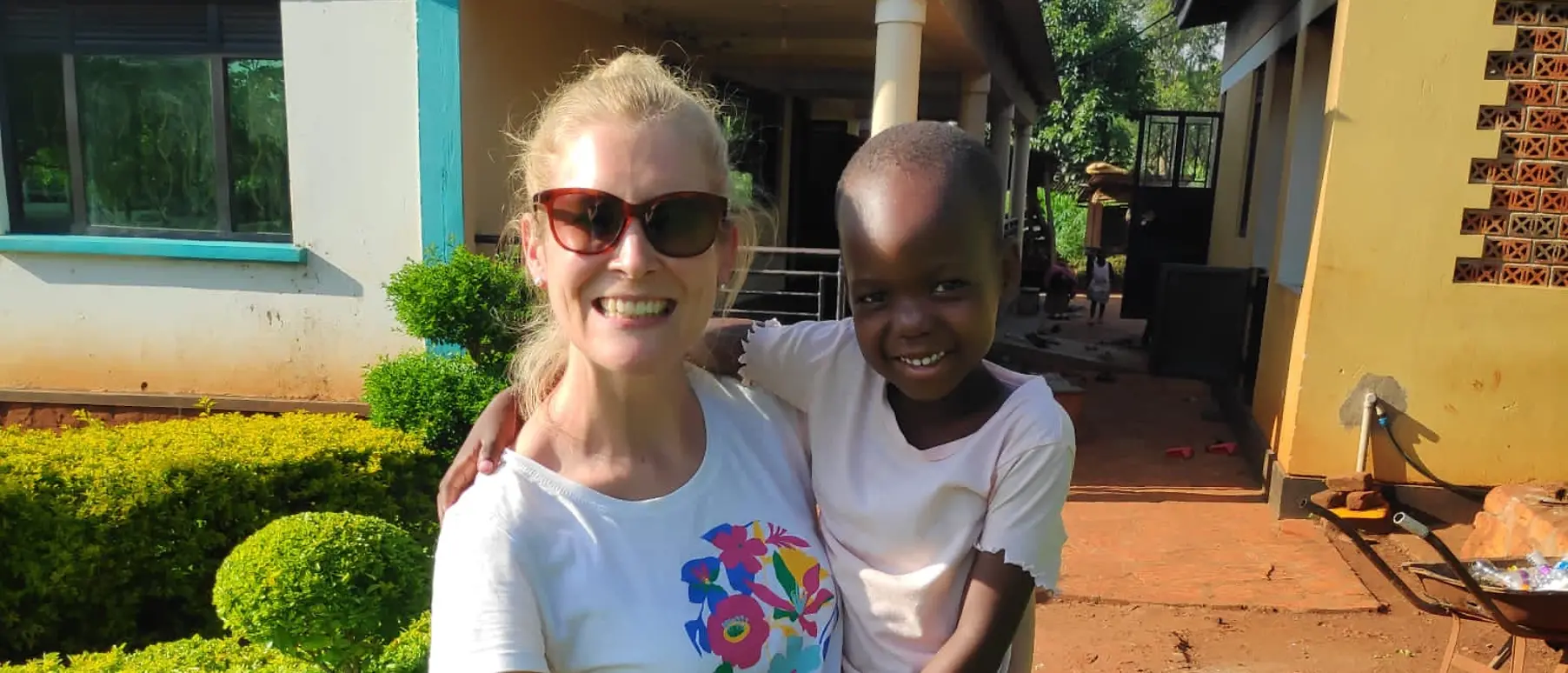
Children's rights have always been a subject close to my heart. Children are the smallest and weakest link in the chain. At the same time, they are our future. If we don't equip our children with values and education, then our society will not stand a chance.
Between my bachelor’s and master’s degree, I spent a year in Chile for a voluntary social service, where I worked in a kindergarten in an impoverished neighborhood. Afterwards, I continued to support the project during my studies. In my full-time job, I often find it difficult to find time for volunteering. I have spent a great deal of time looking for something that would allow me to combine my professional life with my personal commitment. A few years ago, I met Gabi and decided to fly to Uganda with her. But then the pandemic got in the way, so it didn't work out until 2023.
I stayed in Uganda for a total of four weeks. I saved up my annual leave and got five days of special leave. My social engagement was immediately welcomed with open arms – by my superiors as well as by my colleagues, who obviously had to take on more work during my absence. Henkel further provided pre-departure medical assistance: Everyone was given an individual vaccination plan and a first-aid kit.
I didn't have any specific expectations. The only expectations I had were directed at myself. I knew I had to be open-minded, flexible – because it never turns out the way you expect it to. You have to be receptive to things being different: It's not right or wrong how things work there, it's just different. But I also knew that I could do that. I like being out of my comfort zone.
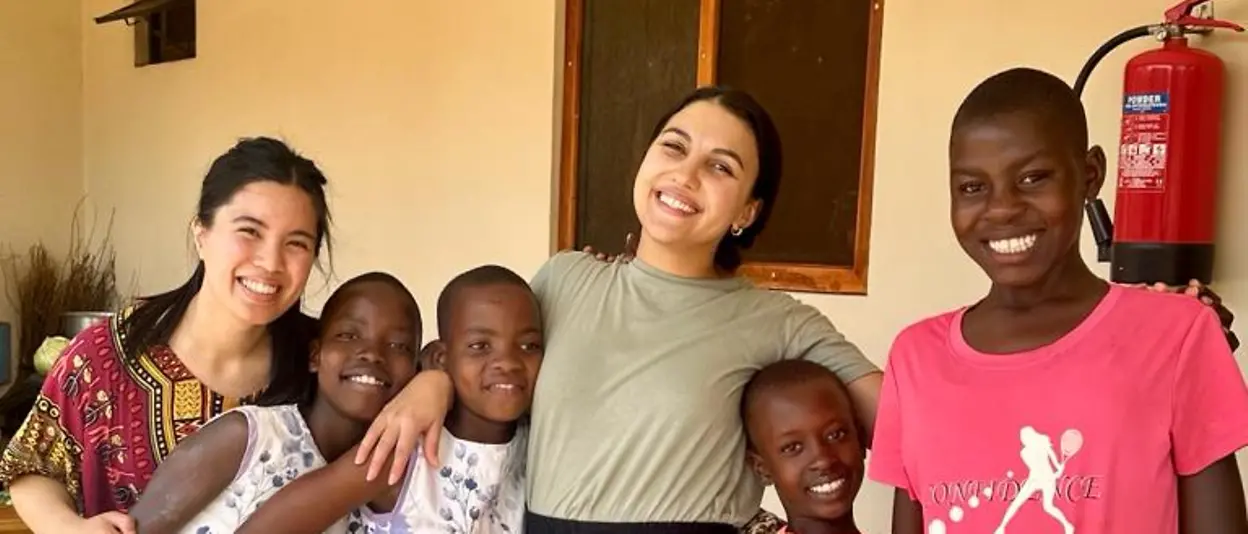
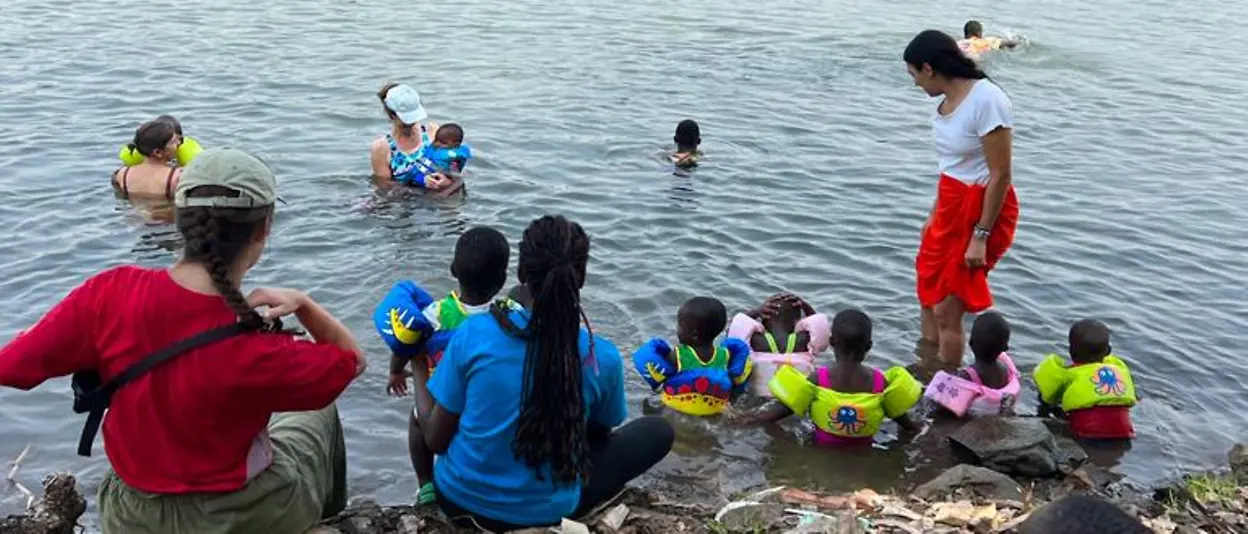
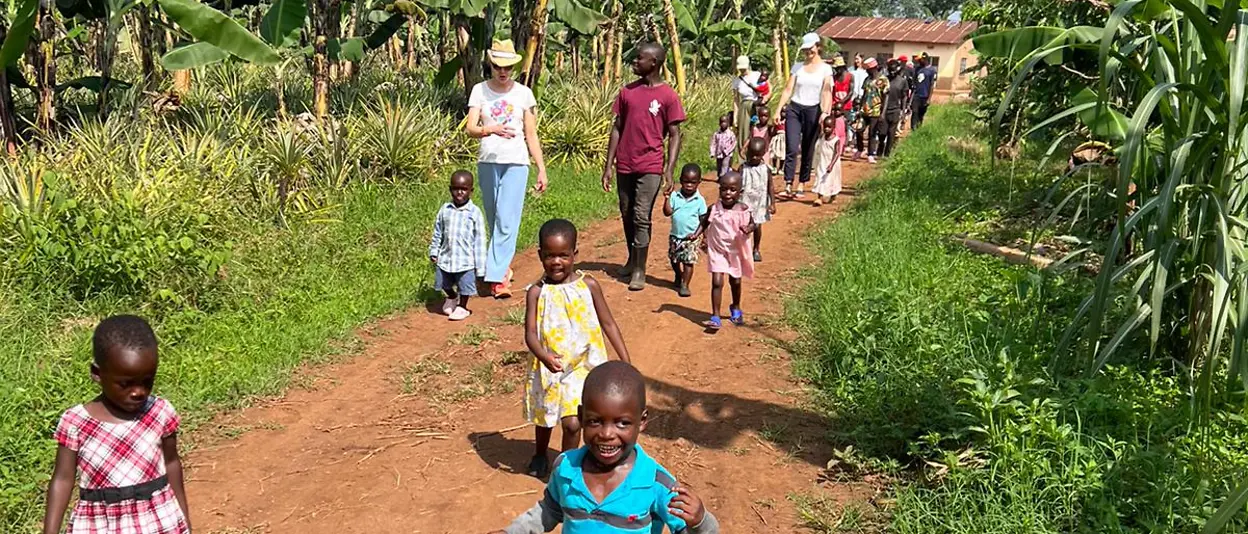
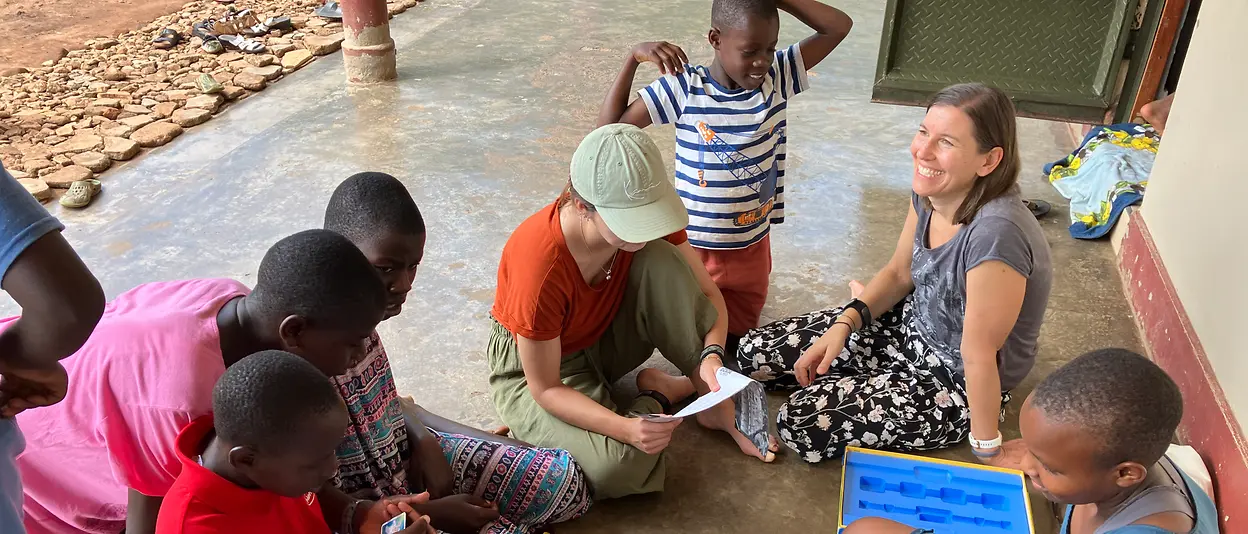
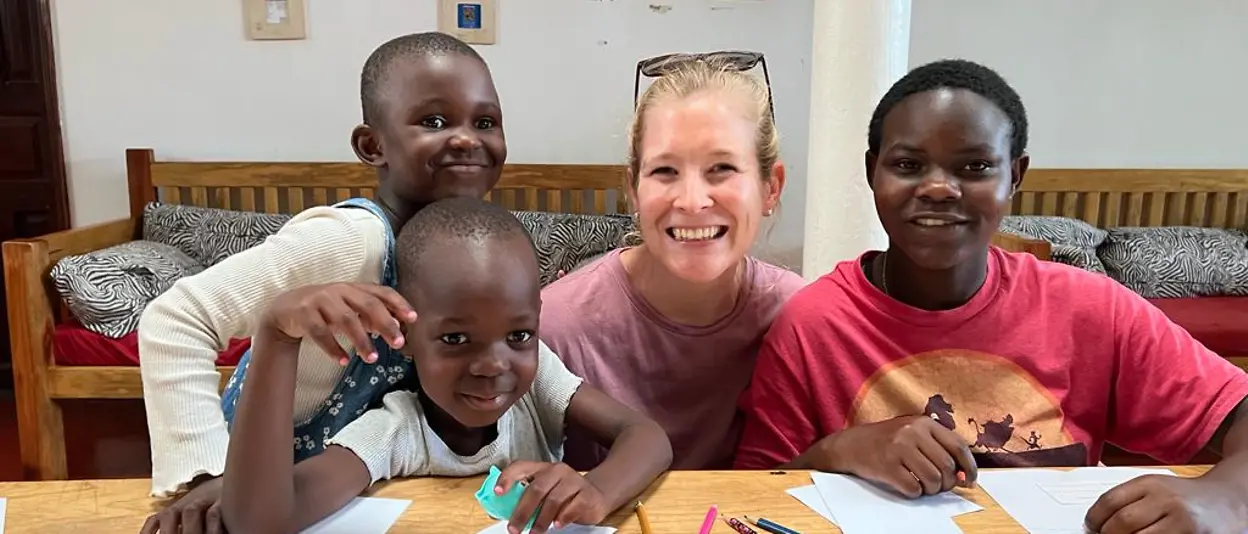
We usually spent the day with the children. They had a strong need for attention. Just having someone to cuddle or talk to. They live like siblings in a very large community and are lovingly raised. But individual attention is simply not possible in such an oversized extended family.
I had a long chat with one girl about her wishes and dreams. She wants to study law to – as she says – defend those who cannot defend themselves. Afterwards, she wrote me a letter and thanked me for the conversation. What was nice for me, but somehow a given, was "the greatest thing" for her. She says that I gave her the feeling that she can achieve something. Value lies in the intangible. The interaction between people. That has an effect on the children – but also on us, of course.
The time I spent in Uganda was demanding, but in a completely different way to a day at the office. You get a bit overwhelmed by the individual stories. Emotionally, it's extremely challenging. You have two options: You can feel overwhelmed and do nothing. Or you can say "there's so much to do" and use that as motivation to get started. Of course, it's just a drop in the ocean. But when it comes to a child, it's always worth it. The Sonrise Ministries are home to 250 children who grow up with values such as compassion, sharing and democratic thinking. They receive an education. The whole project was initiated by former orphans. If I think about what the children who live there can achieve one day with this foundation. By getting involved in politics, in the healthcare system – or simply by being kind and good citizens. You can't change the system on your own. But you can be part of an effect that spreads far and wide.
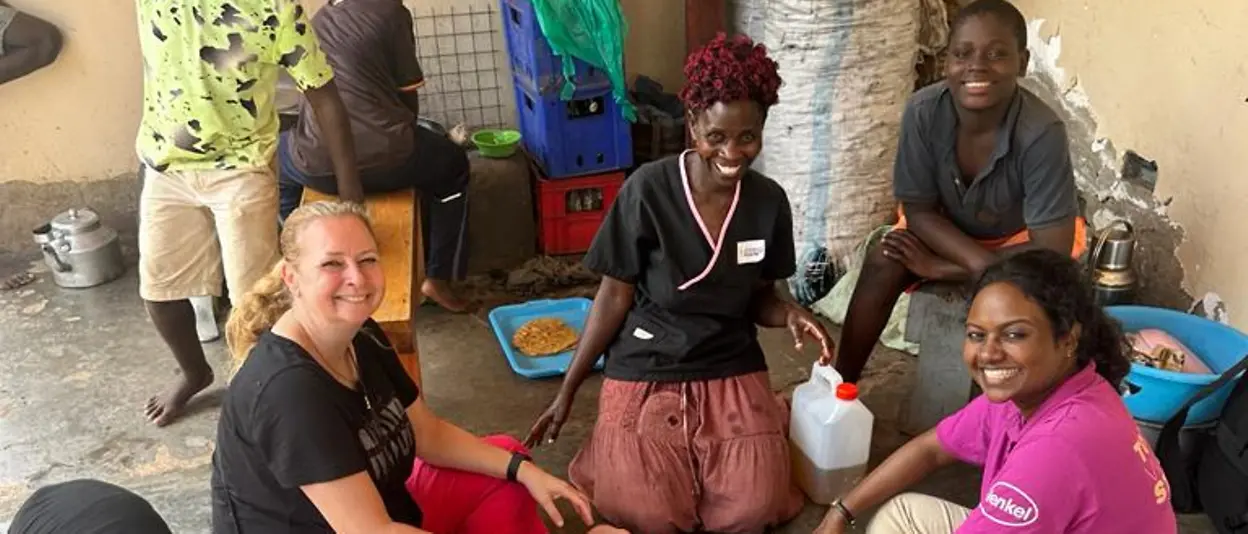
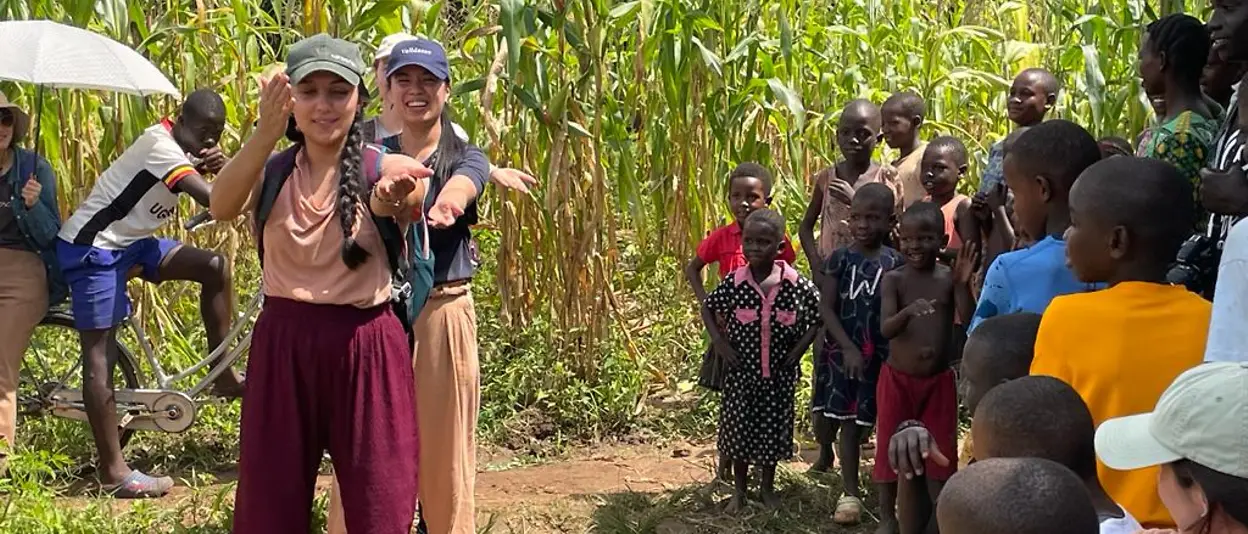
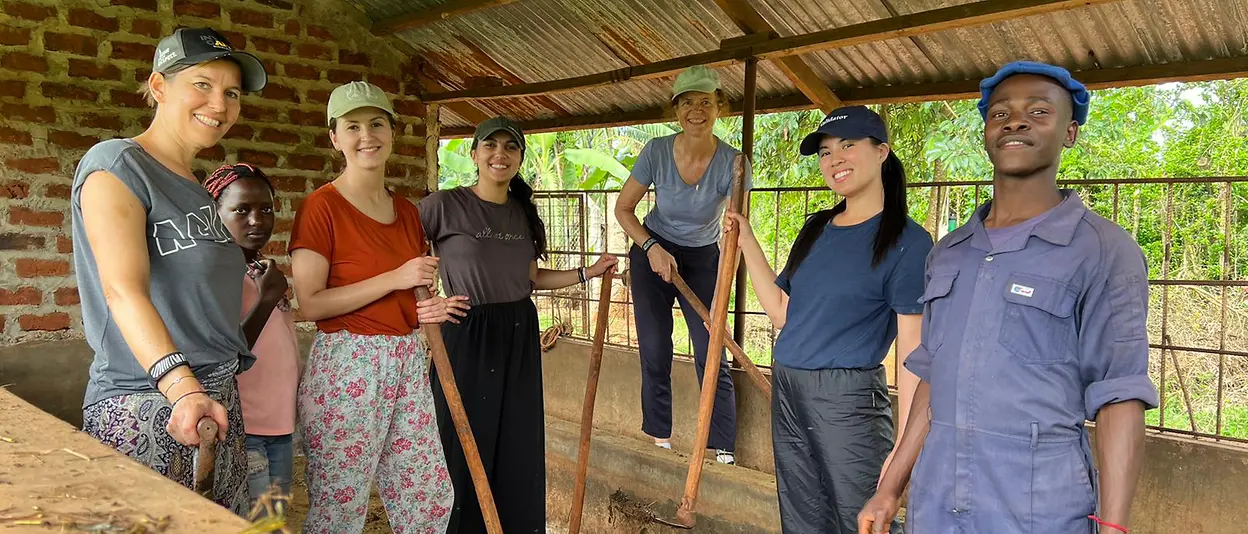
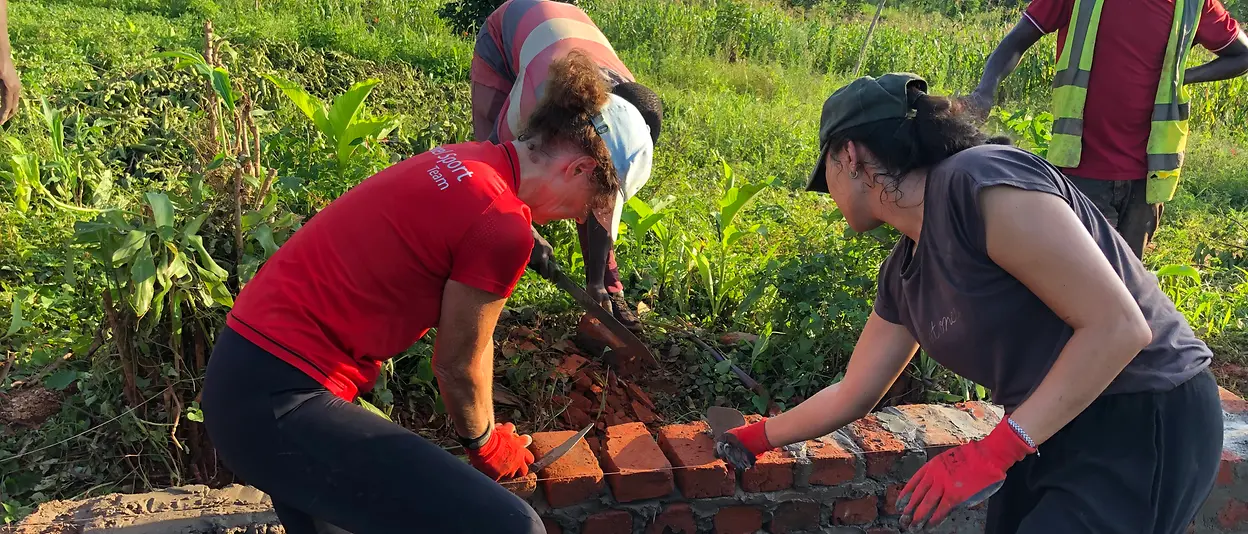
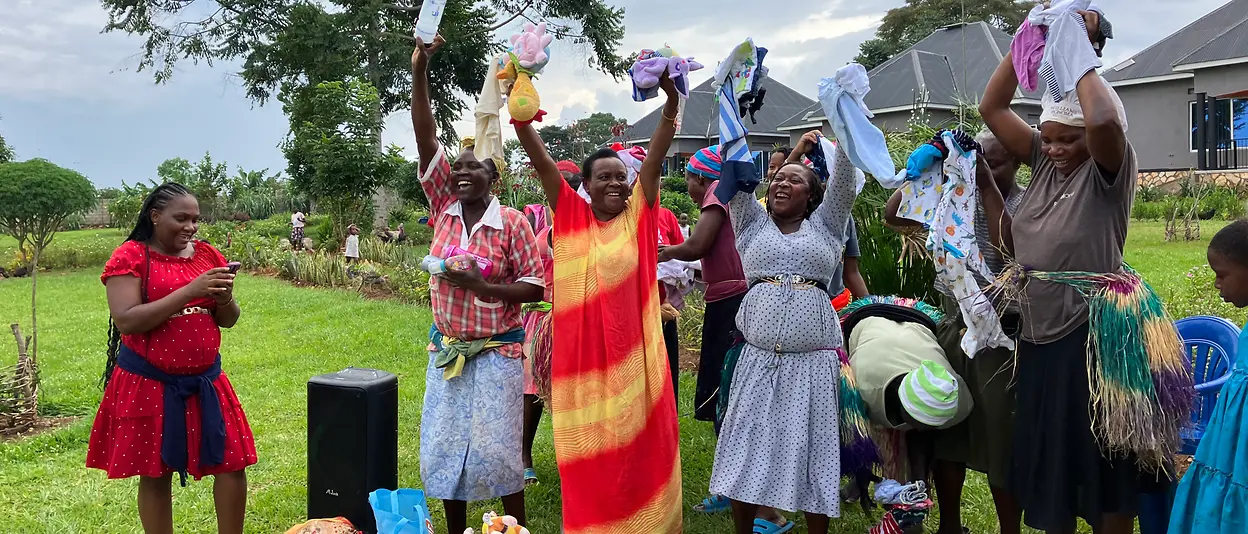
We supported them in their day-to-day activities, built a wall, installed a chicken coop, and organized a Christmas charity activity. We also brought many donations in kind from our families, friends, and colleagues at home which needed to be sorted and distributed. Of course, being at the orphanages was great for the children and for us. But our trip had a long-lasting effect: It wasn't just a vacation that you come home from and then carry on as before. I feel responsible. I am a member of the association and would like to financially support individual children who have grown particularly close to my heart. To ensure their education. Which is so vital.
Volunteering in general is so important. There are many areas in our society that would not exist without this commitment. Everyone can contribute something. If you don't have time, you can perhaps help by providing financial aid – both are valuable.
Monika Böhnke
Manager Strategy & Portfolio at Henkel
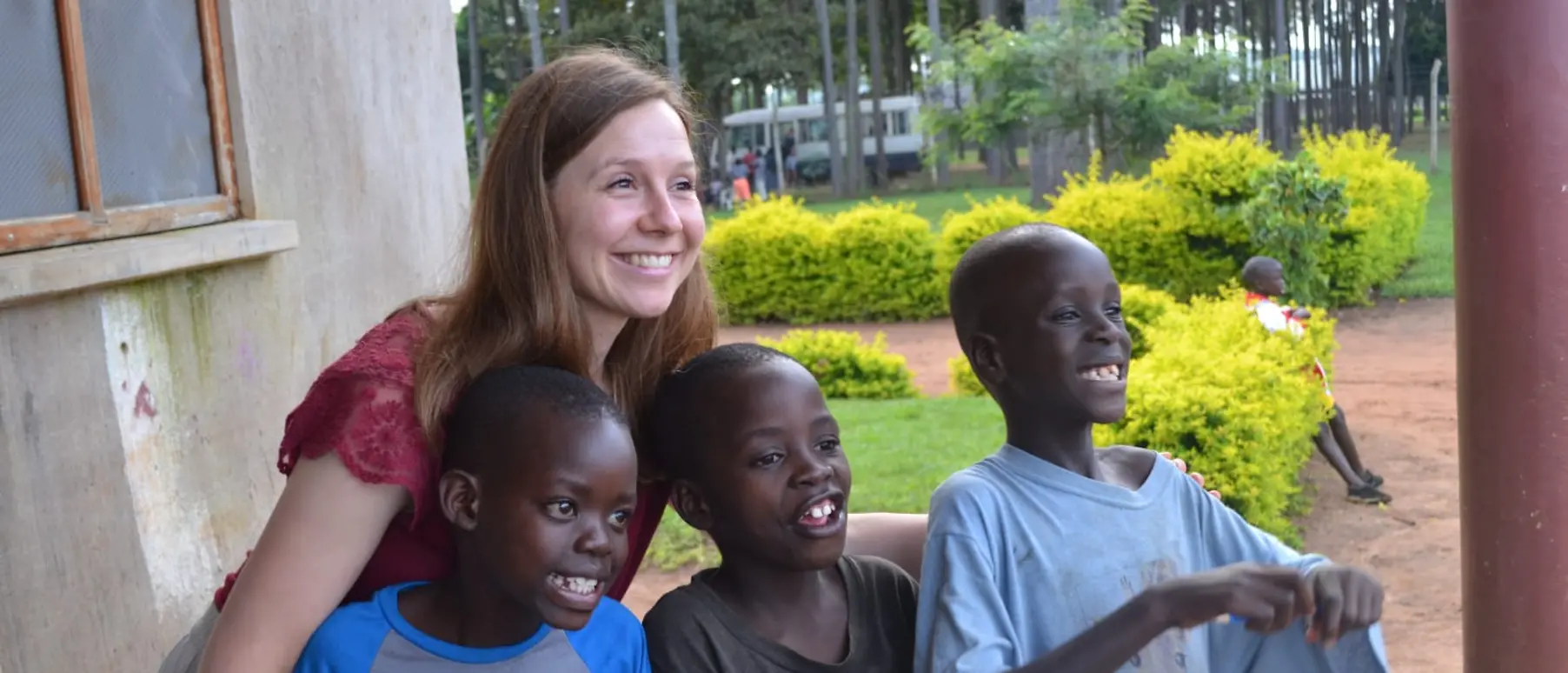
I have always had a special link to Africa. As a student, I was allowed to accompany the Federal President, at the time Horst Köhler, on his state trip to Mozambique, Madagascar, and Botswana. I was only 15 years old then. After the trip, I gave many talks and collected donations to support a project for street children in Madagascar. A good friend at Henkel knew about this and asked if I would like to accompany her to Uganda. Her call reached me on a Tuesday. I met Gabi on Thursday and by Friday I had already booked my flight.
It wasn't difficult to get me on board. I was enthusiastic about the project from the beginning and Gabi and I had great chemistry right away. My friends, family and colleagues were also excited by my plans. Many collected donations and wrote cards for the Christmas charity activity.
So many things are completely different in Africa than in Europe. I knew it would be an emotional challenge. I cried a lot back in Mozambique. And I had to cry a lot in Uganda as well. It impacts you to see children who wear torn clothes and suffer from hunger. But the great thing about the Sonrise Ministries is that the initiative gives so much hope. The children who live there are doing well. This knowledge makes it easier to overcome your own pain. It shows that you can make a lasting difference if you get involved.
But you also need the right people on site. And the Sonrise Ministries have them. Many of the local employees are steadfast because they themselves grew up as orphans. They stick together and stand up for each other. Almost everyone there is part of the Sonrise family, even our bus driver Sam or Aisha who works as a lawyer pro bono for the initiative. The children grow up with an enormous sense of family. As outsiders, we would never have the chance to set up a project like this. Nevertheless, there is a lack of financial resources, but also a lack of experience in many aspects. This is where we can contribute.
Children of all ages live in the orphanages. One of the teenagers would love to study medicine one day. Whenever the nurse enters the facility, he stands there and asks if he can do the malaria test or may treat wounds. I talked to him for a long time, and he thanked me for the "adult conversation." The children and especially the teenagers have a huge thirst for knowledge. The caregivers look after them very lovingly – but most of them did not have the privilege of attending school and can hardly accommodate the adolescents’ curiosity. The children are also very isolated: Their radius is within walking distance; they don't get to see much of the outside world and only very rarely there is access to the internet. We have organized computer courses with the teenagers and set up e-mail addresses for them. Being in contact with us also gives the children courage and hope and inspiration for what they can do in life.
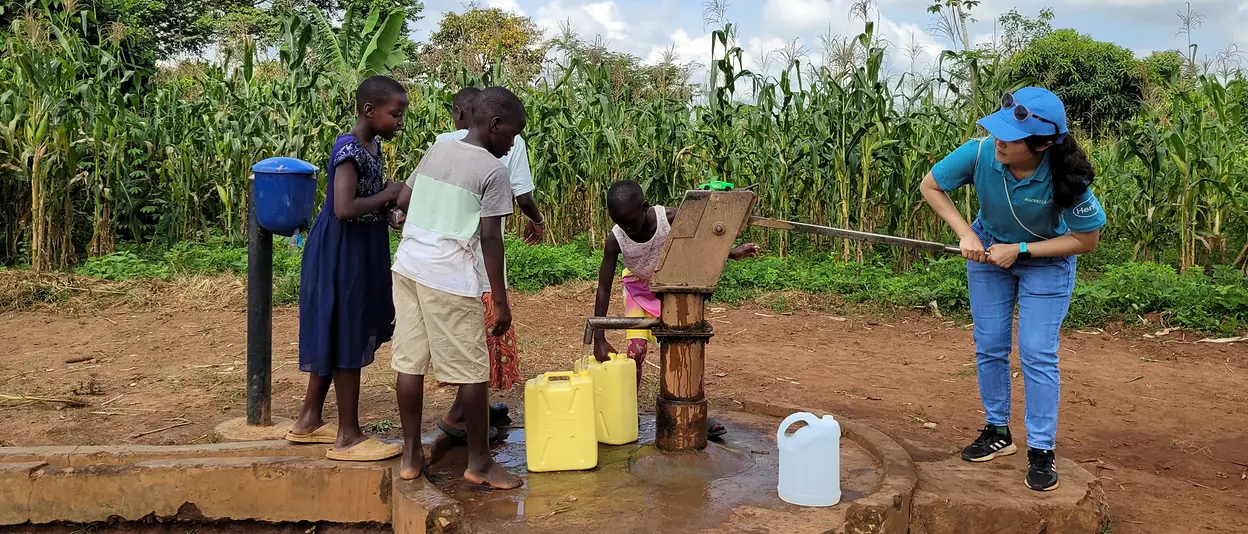
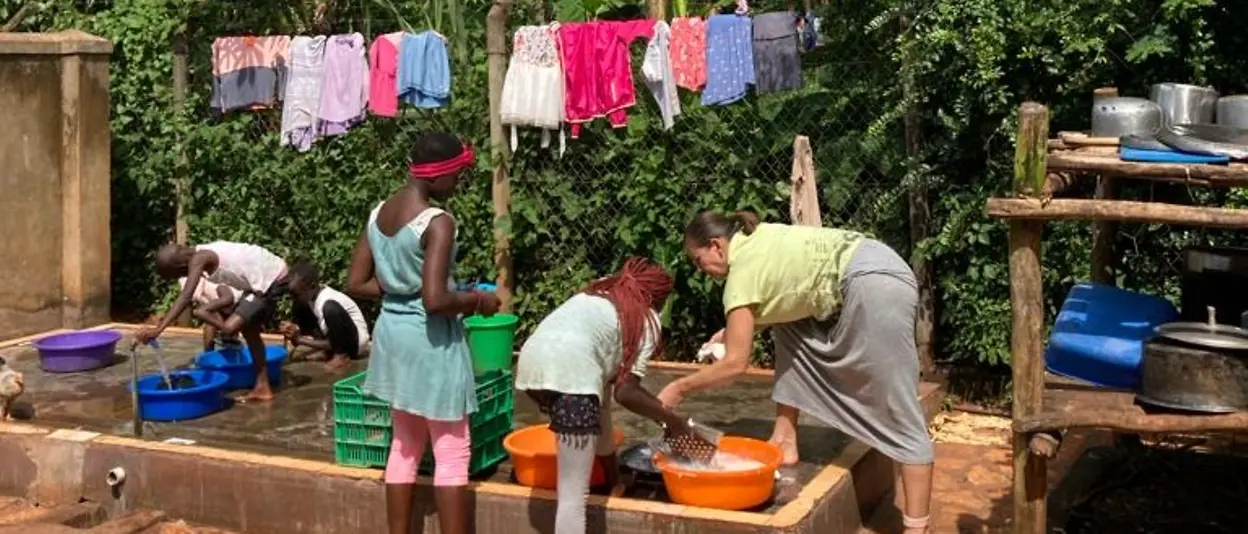
The children look out for each other and are affectionate towards each other. They share everything. Really everything. And I don't refer to just the brothers and sisters in the homes, but the entire community. Clothing donations are shared with the village children. Community members are encouraged to attend school and fetch water from the well. Grandpa Stefan who lives in the village is blind and in need of help. Three children from the Children's Home visit him every day. They cook for him, wash for him, and take care of him. The children don't complain, they do it well and with a lot of heart. It is a stark contrast to the self-centered society in Europe. We in the privileged Global North can still learn from these children.
The children also didn't cry when we left. They weren't sad that we were leaving, they were just grateful for the experience and time spent with us. They have a different perspective on things. I, on the other hand, couldn't hold back my tears.
Now when someone asks me how I'm doing, I say, "I'm great. I couldn't be doing better.” My family is well. I have great friends, a roof over my head and a job that I enjoy. There is nothing, absolutely nothing, that I could complain about.
I would like to go back to Uganda. My boss already knows about it. What should I wait for? Life is now. I’m healthy, I have the physical and mental strength to get involved. There is no question in my mind that I will continue to provide support – both on site and from home.
Gabi Haak on her experiences in Uganda
Gabi Haak
Manager ICD Operating Excellence at Henkel
My first visit to the Sonrise Ministries felt like I had finally found my place in life. A feeling of being part of a family, also because the children immediately built a very close relationship with me. The organization impressed me because they don't just use the donations for themselves, but also for members of the community. This is unique in Uganda. The three founders grew up in an orphanage themselves. They come from a Baptist community and the value of sharing is deeply rooted in their religion. The children learn from an early age that they always have to give something back from the little they have.
Since my first visit in 2014, I have been to Uganda a total of 11 times, each time for a month. In 2015, a colleague asked me if he could join me. Through internal communication at Henkel, word about my social engagement got around and more and more colleagues wanted to come along. It was never planned, but we now have a large group of volunteers: Last year, we traveled with 17 people – and 12 of them were colleagues from Henkel.
Organizing the trips is a lot of work, even though we just work as an intermediary for the Sonrise Ministries. But through the trips we gain trust. Because people can see that 100 percent of the donations reach the local community. We pay all running costs from the association's membership fees. And whatever is left goes towards the projects.
Peace's Hope is not a project initiated by Henkel, but our commitment is now supported by the company in many ways. Up to five days of special leave are granted for the trips. And the “Fritz Henkel Stiftung” foundation has contributed financially to the construction of schools, homes, and water wells. The volunteering initiative "MIT" is also always available to provide me with help and advice. Articles about our activities on internal and external platforms encourage not only colleagues but also other interested individuals to get involved.
It's a constant learning curve for me. On every team trip I learn something to consider the following year. And the benefit of that goes both ways. What I learn in the association, I can apply at work, and vice versa. Both require good self-organization and flexibility. My experiences in Uganda have made me much humbler and more modest. This desire of wanting more materialistic things has disappeared completely for me. I am grateful for what I have, and I appreciate it more than ever. Many people have lost sight of what they have – and that they are lot more privileged than most people in this world.
Of course, I've considered packing up here and moving to Uganda. But that wouldn't benefit anyone. I would just be an additional person on site who would have to be looked after and who would inevitably create costs as a consequence. Besides, I really enjoy my job at Henkel. And by talking about the project here, I can raise a lot more awareness for it. That's the perfect balance for me.
Over the past ten years, I have seen how the projects have grown. Most of the children used to live in rented homes – now the organization owns its own properties, there are schools and a secure education for the children. Children from the municipality are also allowed to attend these schools. This means we now have an impact on the lives of more than 10,000 people. And the number keeps growing. The next and largest project to date: We want to build a hospital. With a focus on gynecology and obstetrics, with an integrated HIV station. The mortality rate for mothers and children is very high in Uganda. Building the hospital will take a few years. Things work differently in Uganda than in Germany: You start with the first floor and put it into operation – and when there are funds again, you continue.
It's incredible what you can achieve when you take the first step. Any of us can do it. You just need to have the courage to start. We could change a lot in the world if everyone just took that first step.
Of course, there are moments when it all just gets too much for me as well. But then, all I have to do, is look at a picture of the children and everything is right again.
Sina Pfanschilling on her experiences in Uganda
Sina Pfanschilling
Media Relations Manager at Henkel
Children's rights have always been a subject close to my heart. Children are the smallest and weakest link in the chain. At the same time, they are our future. If we don't equip our children with values and education, then our society will not stand a chance.
Between my bachelor’s and master’s degree, I spent a year in Chile for a voluntary social service, where I worked in a kindergarten in an impoverished neighborhood. Afterwards, I continued to support the project during my studies. In my full-time job, I often find it difficult to find time for volunteering. I have spent a great deal of time looking for something that would allow me to combine my professional life with my personal commitment. A few years ago, I met Gabi and decided to fly to Uganda with her. But then the pandemic got in the way, so it didn't work out until 2023.
I stayed in Uganda for a total of four weeks. I saved up my annual leave and got five days of special leave. My social engagement was immediately welcomed with open arms – by my superiors as well as by my colleagues, who obviously had to take on more work during my absence. Henkel further provided pre-departure medical assistance: Everyone was given an individual vaccination plan and a first-aid kit.
I didn't have any specific expectations. The only expectations I had were directed at myself. I knew I had to be open-minded, flexible – because it never turns out the way you expect it to. You have to be receptive to things being different: It's not right or wrong how things work there, it's just different. But I also knew that I could do that. I like being out of my comfort zone.
We usually spent the day with the children. They had a strong need for attention. Just having someone to cuddle or talk to. They live like siblings in a very large community and are lovingly raised. But individual attention is simply not possible in such an oversized extended family.
I had a long chat with one girl about her wishes and dreams. She wants to study law to – as she says – defend those who cannot defend themselves. Afterwards, she wrote me a letter and thanked me for the conversation. What was nice for me, but somehow a given, was "the greatest thing" for her. She says that I gave her the feeling that she can achieve something. Value lies in the intangible. The interaction between people. That has an effect on the children – but also on us, of course.
The time I spent in Uganda was demanding, but in a completely different way to a day at the office. You get a bit overwhelmed by the individual stories. Emotionally, it's extremely challenging. You have two options: You can feel overwhelmed and do nothing. Or you can say "there's so much to do" and use that as motivation to get started. Of course, it's just a drop in the ocean. But when it comes to a child, it's always worth it. The Sonrise Ministries are home to 250 children who grow up with values such as compassion, sharing and democratic thinking. They receive an education. The whole project was initiated by former orphans. If I think about what the children who live there can achieve one day with this foundation. By getting involved in politics, in the healthcare system – or simply by being kind and good citizens. You can't change the system on your own. But you can be part of an effect that spreads far and wide.
We supported them in their day-to-day activities, built a wall, installed a chicken coop, and organized a Christmas charity activity. We also brought many donations in kind from our families, friends, and colleagues at home which needed to be sorted and distributed. Of course, being at the orphanages was great for the children and for us. But our trip had a long-lasting effect: It wasn't just a vacation that you come home from and then carry on as before. I feel responsible. I am a member of the association and would like to financially support individual children who have grown particularly close to my heart. To ensure their education. Which is so vital.
Volunteering in general is so important. There are many areas in our society that would not exist without this commitment. Everyone can contribute something. If you don't have time, you can perhaps help by providing financial aid – both are valuable.
Monika Böhnke on her experiences in Uganda
Monika Böhnke
Manager Strategy & Portfolio at Henkel
I have always had a special link to Africa. As a student, I was allowed to accompany the Federal President, at the time Horst Köhler, on his state trip to Mozambique, Madagascar, and Botswana. I was only 15 years old then. After the trip, I gave many talks and collected donations to support a project for street children in Madagascar. A good friend at Henkel knew about this and asked if I would like to accompany her to Uganda. Her call reached me on a Tuesday. I met Gabi on Thursday and by Friday I had already booked my flight.
It wasn't difficult to get me on board. I was enthusiastic about the project from the beginning and Gabi and I had great chemistry right away. My friends, family and colleagues were also excited by my plans. Many collected donations and wrote cards for the Christmas charity activity.
So many things are completely different in Africa than in Europe. I knew it would be an emotional challenge. I cried a lot back in Mozambique. And I had to cry a lot in Uganda as well. It impacts you to see children who wear torn clothes and suffer from hunger. But the great thing about the Sonrise Ministries is that the initiative gives so much hope. The children who live there are doing well. This knowledge makes it easier to overcome your own pain. It shows that you can make a lasting difference if you get involved.
But you also need the right people on site. And the Sonrise Ministries have them. Many of the local employees are steadfast because they themselves grew up as orphans. They stick together and stand up for each other. Almost everyone there is part of the Sonrise family, even our bus driver Sam or Aisha who works as a lawyer pro bono for the initiative. The children grow up with an enormous sense of family. As outsiders, we would never have the chance to set up a project like this. Nevertheless, there is a lack of financial resources, but also a lack of experience in many aspects. This is where we can contribute.
Children of all ages live in the orphanages. One of the teenagers would love to study medicine one day. Whenever the nurse enters the facility, he stands there and asks if he can do the malaria test or may treat wounds. I talked to him for a long time, and he thanked me for the "adult conversation." The children and especially the teenagers have a huge thirst for knowledge. The caregivers look after them very lovingly – but most of them did not have the privilege of attending school and can hardly accommodate the adolescents’ curiosity. The children are also very isolated: Their radius is within walking distance; they don't get to see much of the outside world and only very rarely there is access to the internet. We have organized computer courses with the teenagers and set up e-mail addresses for them. Being in contact with us also gives the children courage and hope and inspiration for what they can do in life.
The children look out for each other and are affectionate towards each other. They share everything. Really everything. And I don't refer to just the brothers and sisters in the homes, but the entire community. Clothing donations are shared with the village children. Community members are encouraged to attend school and fetch water from the well. Grandpa Stefan who lives in the village is blind and in need of help. Three children from the Children's Home visit him every day. They cook for him, wash for him, and take care of him. The children don't complain, they do it well and with a lot of heart. It is a stark contrast to the self-centered society in Europe. We in the privileged Global North can still learn from these children.
The children also didn't cry when we left. They weren't sad that we were leaving, they were just grateful for the experience and time spent with us. They have a different perspective on things. I, on the other hand, couldn't hold back my tears.
Now when someone asks me how I'm doing, I say, "I'm great. I couldn't be doing better.” My family is well. I have great friends, a roof over my head and a job that I enjoy. There is nothing, absolutely nothing, that I could complain about.
I would like to go back to Uganda. My boss already knows about it. What should I wait for? Life is now. I’m healthy, I have the physical and mental strength to get involved. There is no question in my mind that I will continue to provide support – both on site and from home.


1 of 15

SOCIAL ENGAGEMENT
CONTRIBUTING TO THRIVING COMMUNITIES
Paving the way to a viable and sustainable future for all with passion and commitment – that is one of our ambitions as "Pioneers at heart for the good of generations". Organizations and private initiatives around the world rely on the support of people who are willing to help on a voluntary basis.

1 of 3
SPOTLIGHT
MAGAZINE
MAGAZINE
Discover our features with stories and expert insights on innovation, sustainability, digitalization and Henkel’s pioneering culture.